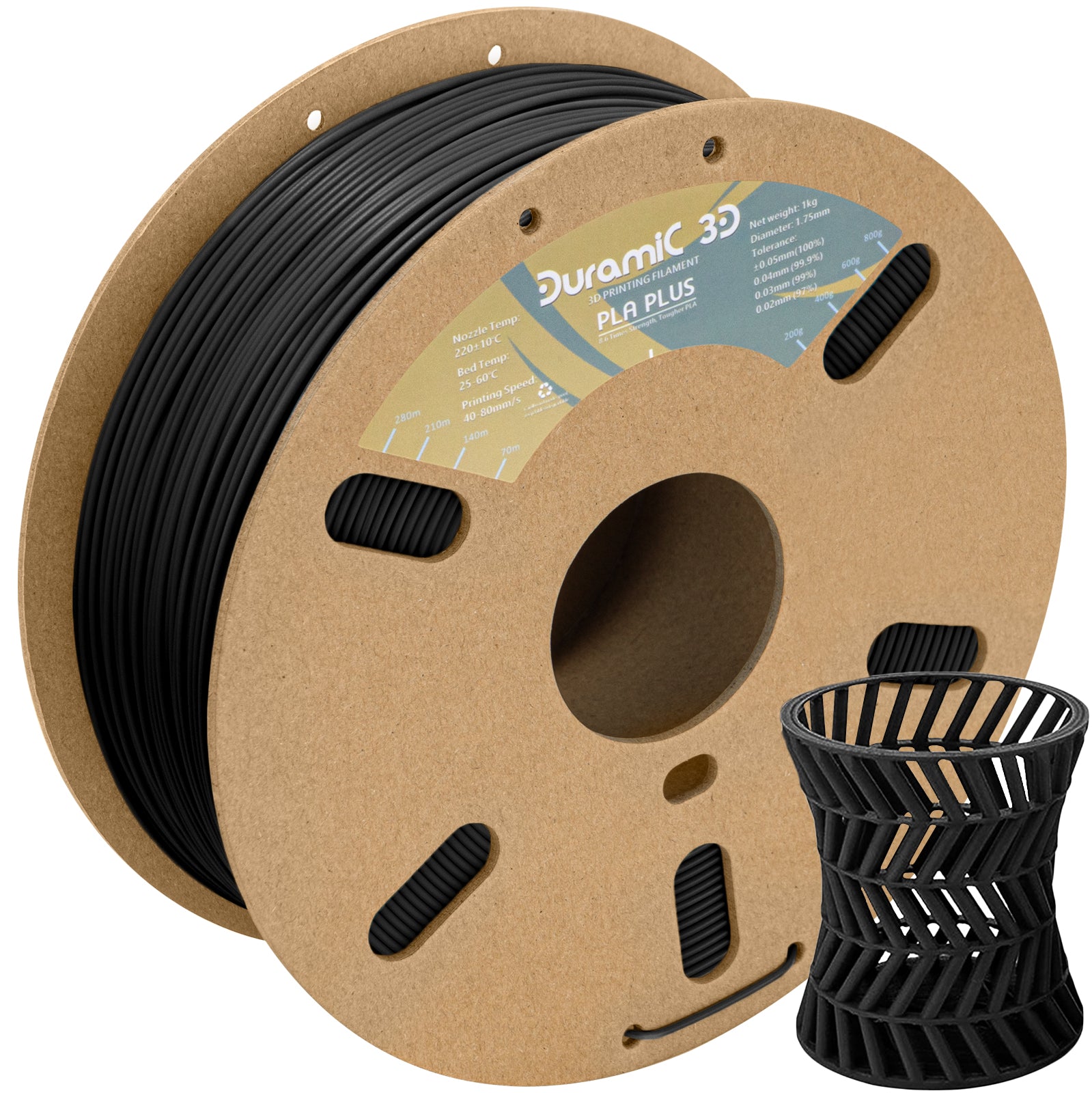
PLA+
4.5 · 5,845 ratings (Amazon, July 2026)
Not ideal for: Parts living outdoors in direct sun (UV) or in a hot car — pick PETG
Filament picker
Three ways in. Zero wrong answers.
The 60-second quiz
Tell us what you're making and we'll shortlist the spools — honestly, tradeoffs included.
Question 1 of 3
New to the jargon? Hover the dotted words: open frame, direct drive, Bowden or AMS.
Three lenses
Prefer poking around? Tap chips to narrow the wall — they stack, so Tough + Outdoor means both at once.
By property
What the part has to be.
By project
What you're actually making.
By printer
Only filter by what you know you have — every Duramic spool prints on an open frame, and only TPU really cares about direct drive vs Bowden or skipping the AMS.
Showing all 7 filaments
The flagship. Tough where standard PLA snaps.
4.5 · 5,845 ratings (Amazon, July 2026)
From $16.99 /kg on Amazon · $20.59 direct
Full specs & settings →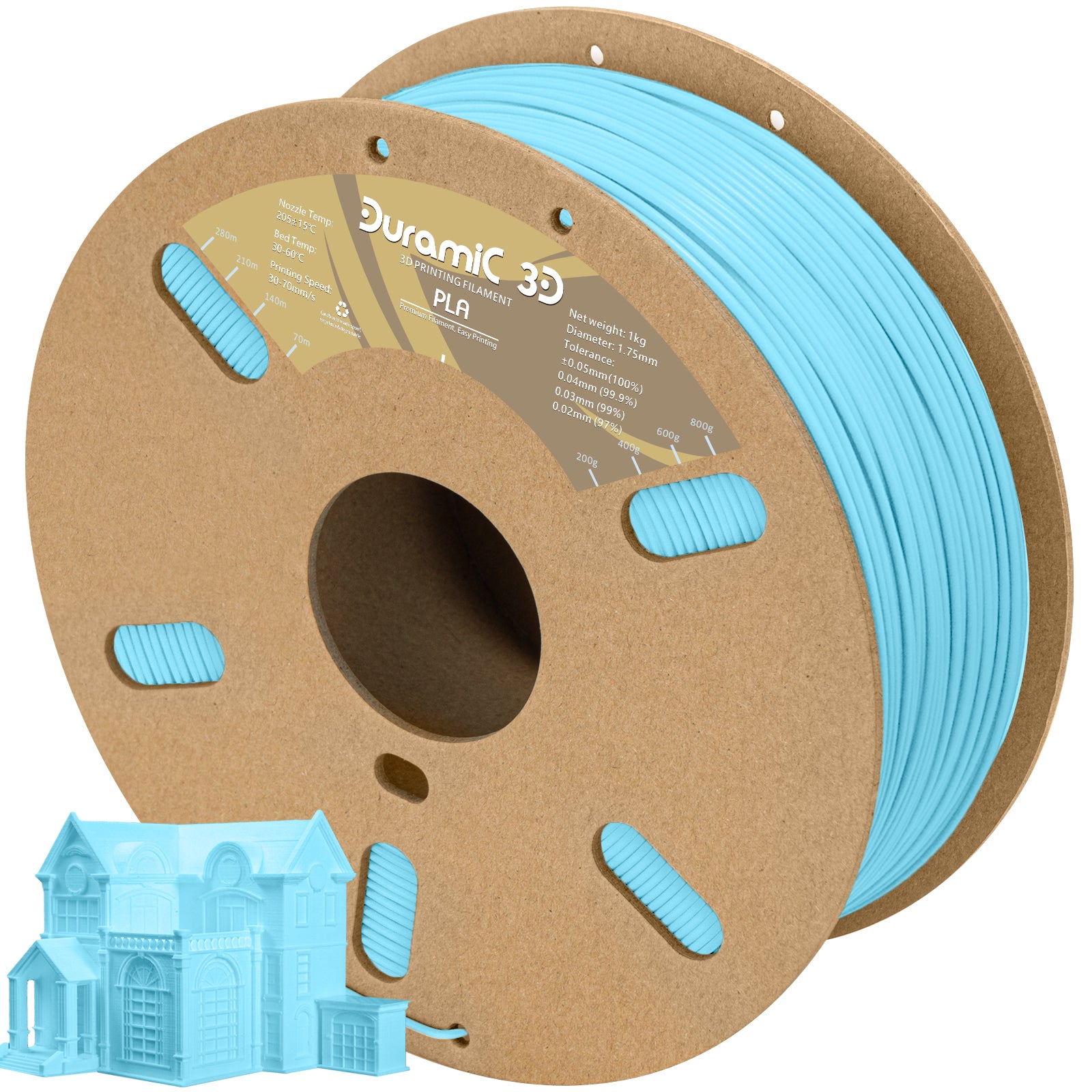
The everyday workhorse — 26 colors of easy.
4.5 · 226 ratings (Amazon, July 2026)
From $13.99 /kg on Amazon · $15.99 direct
Full specs & settings →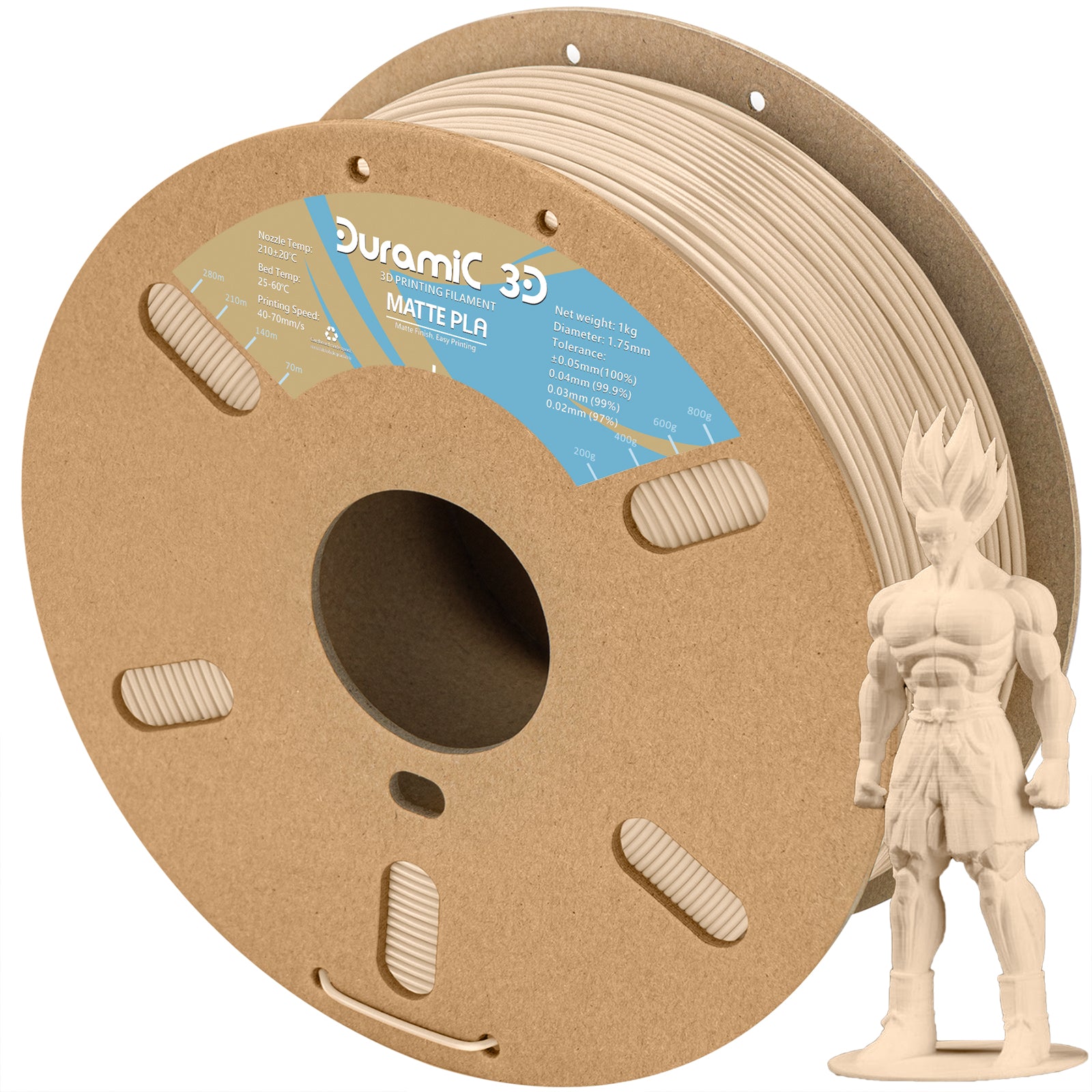
Layer lines? What layer lines.
4.5 · 836 ratings (Amazon, July 2026)
From $13.99 /kg on Amazon · $18.99 direct
Full specs & settings →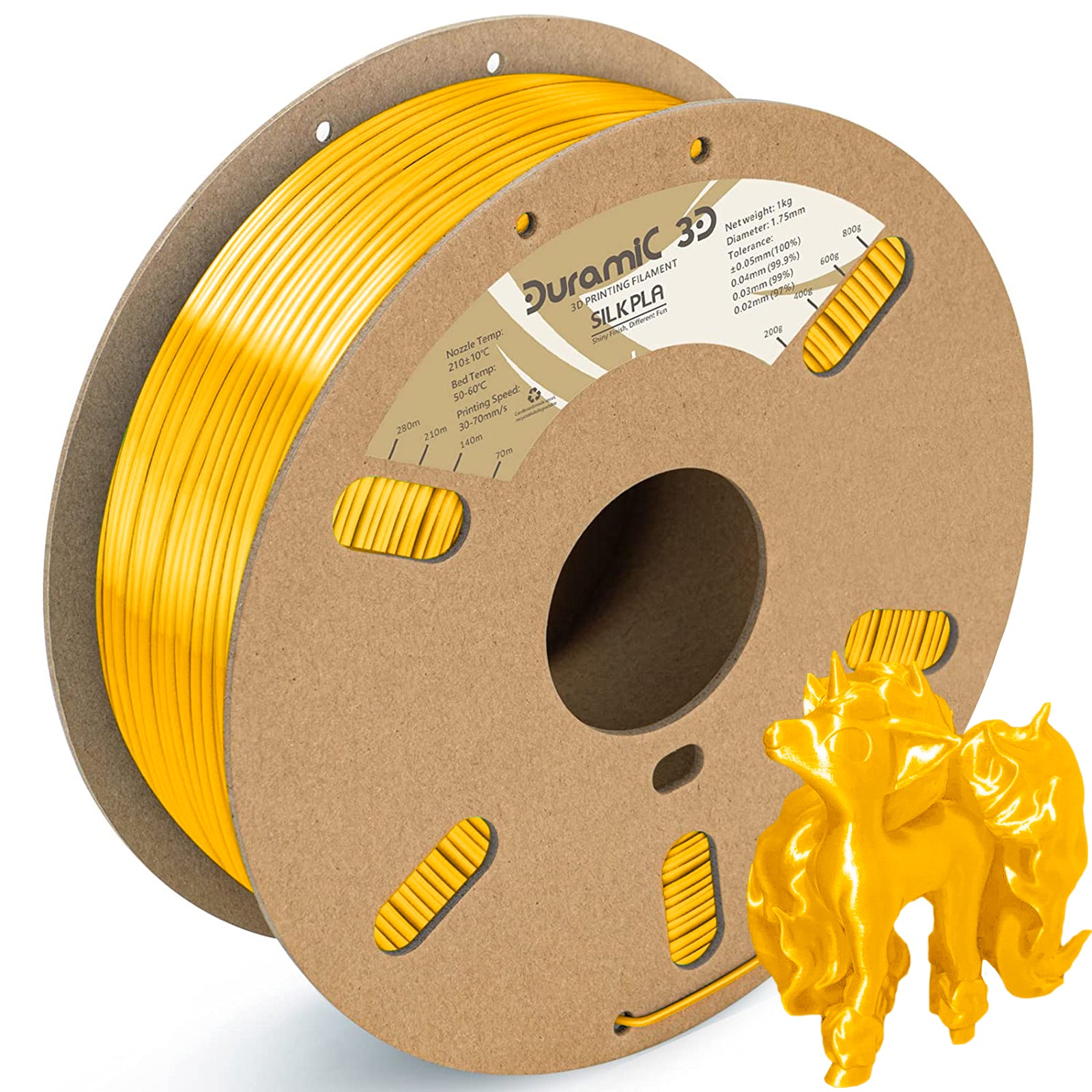
Metallic shine, zero post-processing.
From $18.99 /kg on Amazon · $22.49 direct
Full specs & settings →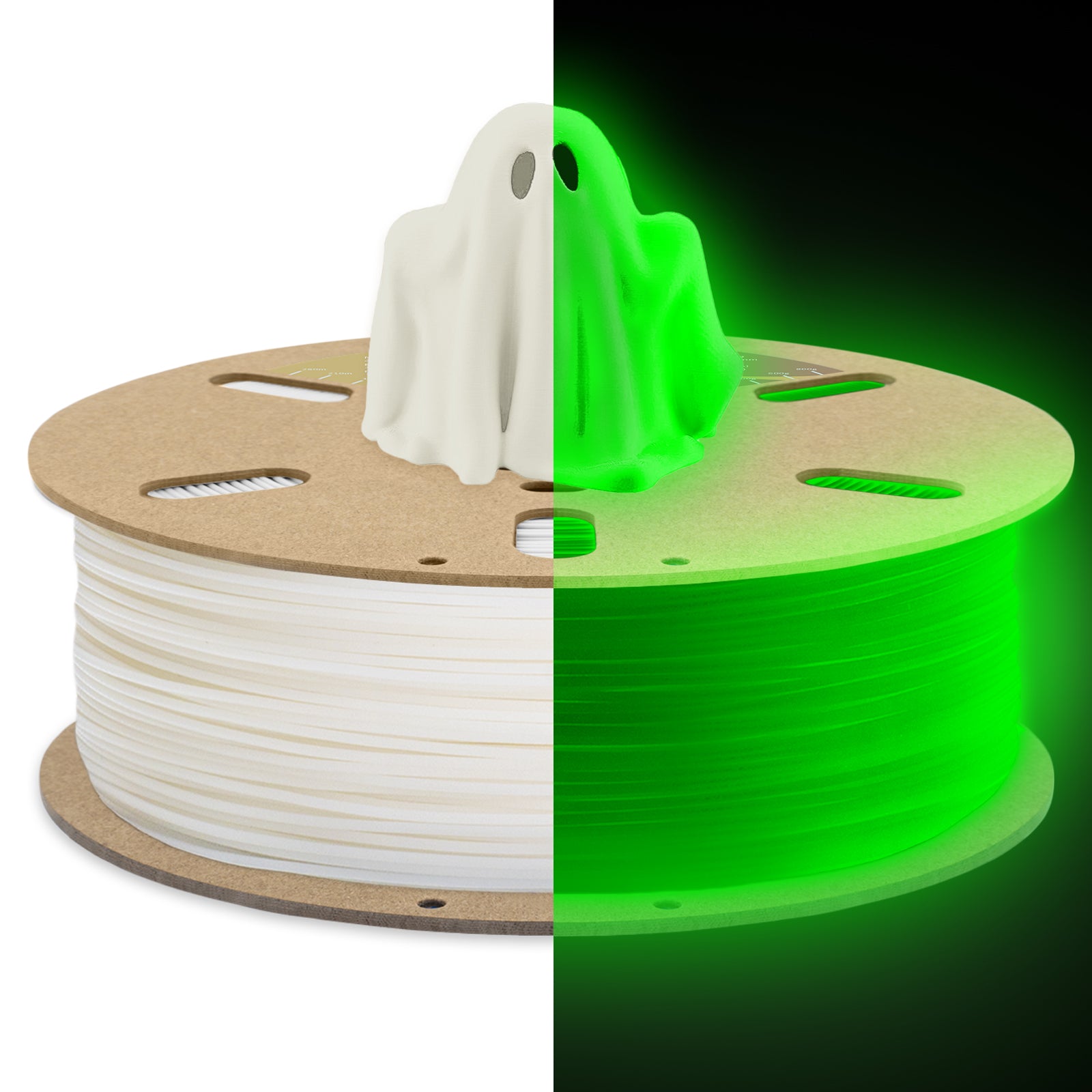
Charge it with light. Watch it come alive.
From $19.99 /kg on Amazon · $23.99 direct
Full specs & settings →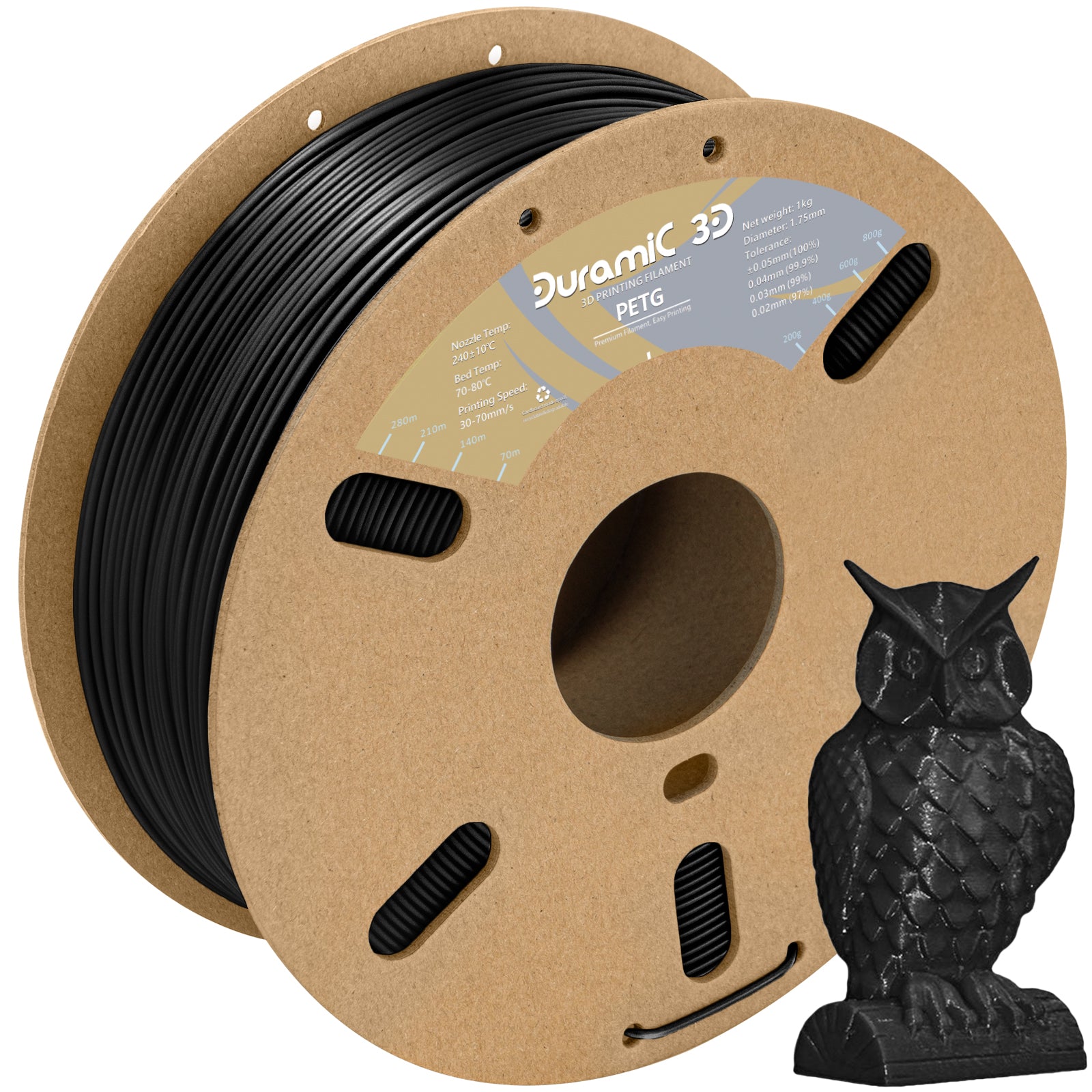
Outdoor-proof. Dishwasher-tough. Water-bottle DNA.
4.3 · 2,745 ratings (Amazon, July 2026)
From $15.99 /kg on Amazon · $18.99 direct
Full specs & settings →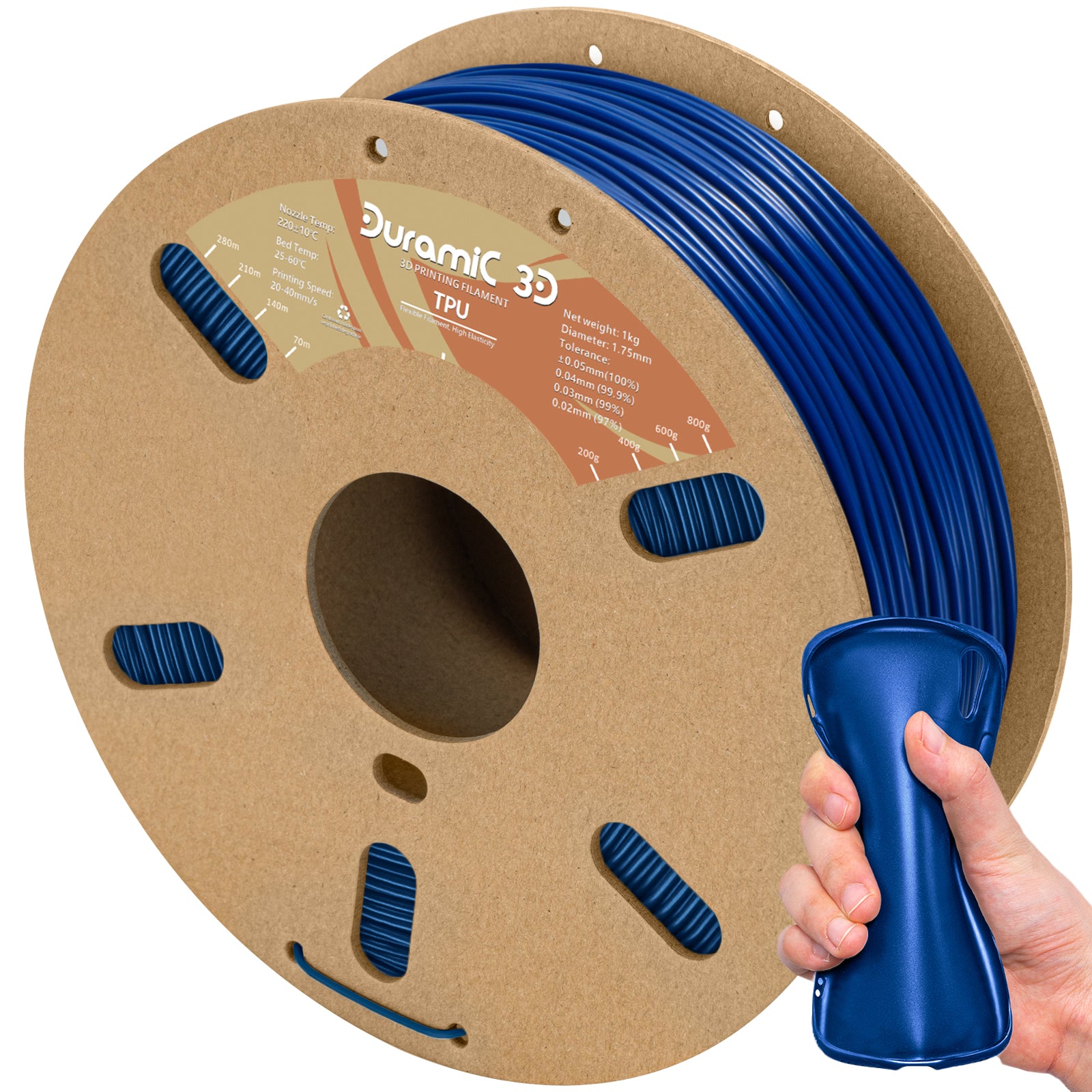
Bends, bounces, and prints better than TPU should.
4.7 · 1,020 ratings (Amazon, July 2026)
From $26.99 /kg on Amazon · $23.99 direct
Full specs & settings →Cheat-sheet
Seven spools, one rule of thumb: buy for the job, not the vibe. Here's the whole decision tree —
Just starting out? PLA. Stock slicer profiles, no enclosure, and near-zero warping.
Will it be dropped, leaned on, or screwed down? PLA+ — impact-modified to bend before it breaks, and it prints just as easily.
Sun, rain, or a hot car? PETG — UV-resistant and fine to about 75 °C.
Should it bend on purpose? TPU 95A — Shore 95A, stretches to roughly 3× its length and bounces back.
Just needs to be gorgeous? Matte PLA for paint-ready minis, Silk for metallic decor, Glow for the nightlight crowd.
Whatever you pick, the boring rules still apply: keep spools dry — PETG and TPU are hygroscopic — and if parts feel weak, a hotter nozzle usually buys you better layer adhesion. None of the seven needs an enclosure or a special hotend; only Glow PLA asks for a hardened nozzle if you feed it spool after spool.
Standard PLA. It prints at low temperatures on any machine with stock slicer profiles, doesn't warp, and doesn't need an enclosure. When your parts start doing real work, step up to PLA+ — it prints just as easily but flexes where standard PLA snaps.
PETG. It's UV- and weather-resistant and keeps its shape to around 75 °C, so it survives sun, rain and hot cars. PLA+ is tougher than standard PLA indoors, but UV and heat degrade any PLA left outside.
No. All seven materials — PLA, PLA+, Matte, Silk, Glow, PETG and TPU — print happily on open-frame printers. An enclosure is a nice-to-have for drafts and speed, never a requirement.
Matte PLA. The diffuse matte surface makes layer lines nearly invisible and takes paint like primer, which is why mini painters treat it as their secret weapon — and at $13.99/kg on Amazon it's one of the cheapest matte filaments anywhere.
For the spreadsheet people
All seven filaments side by side — strength, heat, speed, price per kilo, the works.